
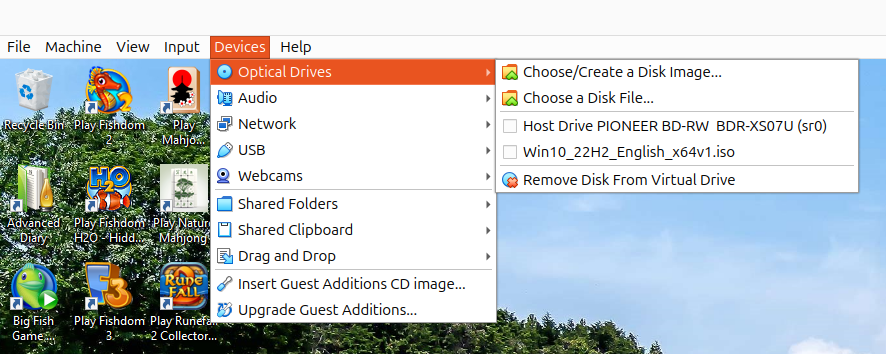
I needed to make an optical disc drive accessible to a Windows virtual machine (VM) running in VirtualBox on an Ubuntu Linux system. The drive was attached to the host operating system (OS) via a USB connection. One way to make a USB optical drive connected to a Linux host available to a Windows VM is to pass through the host optical drive. With the VM running, I could select Devices and then the optical drive connected to the host operating system, "Host Drive PIONEER BD-RW BDR-XS07U (sr0)".
Since I had seen a recommendation to use a USB passthrough method
instead, though, as while passing through the host optical drive
works well for ordinary CD/DVD access, unusual discs or software
that communicates directly with the hardware are less likely to
be problematic if one uses the USB passthrough method, instead,
I chose the USB passthrough option. To do so, I verified that the logged in
user account was in the vboxusers
group by issuing the command grep vboxusers /etc/group in
a terminal
window. If it isn't, you can add the account to that group using
sudo usermod -aG vboxusers $USER. I also verified that
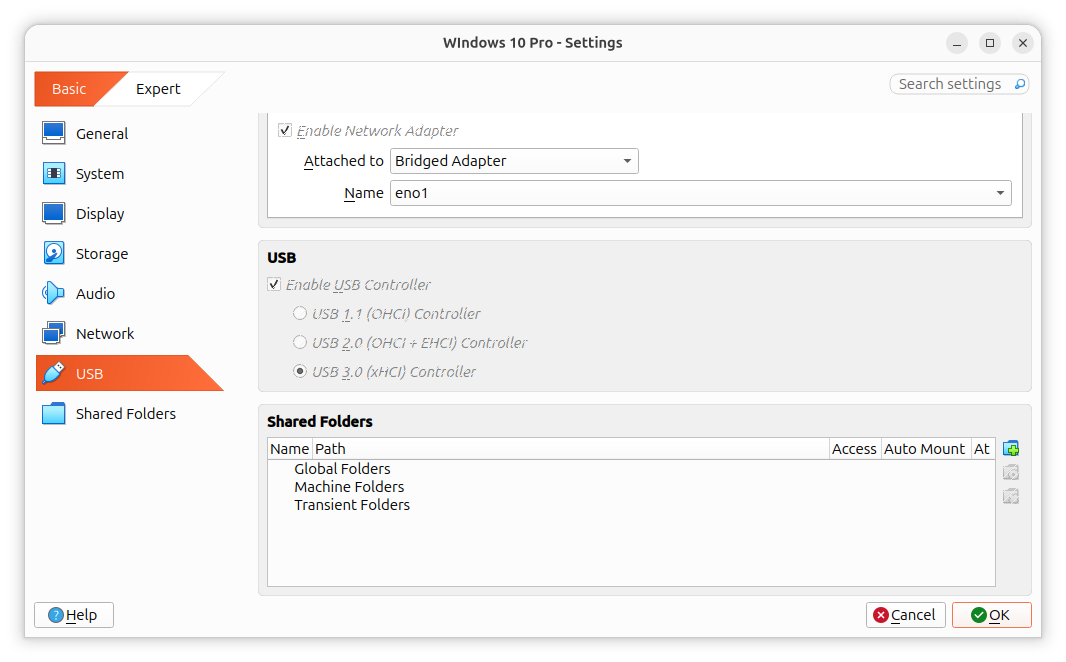
the USB 3.0 Controller option was enabled by selecting the Windows 10
VM in VirtualBox and clicking on Settings and then selecting
USB.
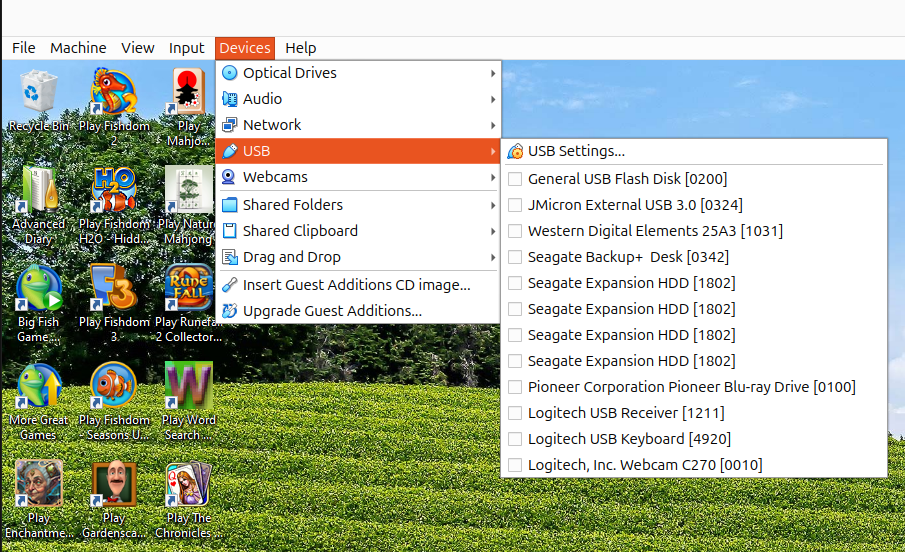
I then made the Pioneer Blu-ray drive accessible inside the Windows VM by clicking on Devices at the top of the running Windows VM window and then selecting Pioneer Corporation Pioneer Blu-ray Drive [0100].
I then was able to see the blu-ray drive in the Windows File Explorer.
Related articles: